
Designing a luxury kitchen in a compact area presents unique challenges, especially when it comes to flooring. For homeowners, kitchen designers, and cooking enthusiasts, selecting the right flooring can transform a cramped space into a functional and elegant hub. The right choices not only enhance aesthetics but also create an illusion of spaciousness. This article explores flooring tips for small spaces, ensuring that every square inch of a luxury kitchen feels expansive and refined.
- Opt for light-colored flooring to reflect light and open up small kitchens.
- Use larger tiles or planks to reduce visual clutter and create a seamless look.
- Install flooring diagonally to elongate the perception of space in tight areas.
- Choose glossy finishes for a reflective surface that adds depth to compact rooms.
- Prioritize durable materials like porcelain or hardwood for long-lasting elegance.
- Minimize grout lines with rectified tiles to maintain a clean, spacious appearance.
- Consider underfloor heating to save space and enhance comfort in luxury designs.
Why Flooring Matters in Small Luxury Kitchens
Flooring serves as the foundation of any kitchen design, particularly in small spaces. In luxury kitchens, it must balance style with practicality to meet the expectations of discerning homeowners. A well-chosen floor can visually expand a room while complementing high-end finishes and appliances. This makes flooring a critical element for creating a cohesive look.
For kitchen designers, flooring is often the starting point for spatial planning. It sets the tone for cabinetry, countertops, and decor in compact areas. Poor choices can make a small kitchen feel cluttered or dated, undermining the luxury aesthetic. Designers must focus on materials and layouts that enhance openness.
Cooking enthusiasts also value flooring for its impact on functionality. Spills and heavy foot traffic are common in kitchens used daily. Flooring must withstand wear while maintaining a polished appearance. Practical flooring tips for small spaces ensure durability without sacrificing style.
Homeowners, meanwhile, seek flooring that elevates their investment. In luxury kitchens, the floor should reflect personal taste and boost property value. Small spaces demand smart solutions to avoid feeling cramped. Thoughtful flooring choices can achieve this balance with ease.
Flooring Tips for Small Spaces: Color and Light
Color plays a pivotal role in making small luxury kitchens feel larger. Light-colored flooring, such as pale oak or white marble, reflects natural and artificial light. This reflection creates an airy atmosphere, a key goal for homeowners in tight spaces. It's a simple yet effective trick for visual expansion.
Kitchen designers often recommend neutral tones like beige or soft gray. These shades pair beautifully with high-end appliances and bold accents. They also prevent the floor from overwhelming other design elements. Neutrals offer flexibility for future updates or style changes.
For cooking enthusiasts, light flooring has practical benefits too. It highlights spills or debris, making cleanup easier in busy kitchens. A reflective surface also brightens the space during meal prep. This enhances visibility for intricate culinary tasks.
However, balance is essential when applying flooring tips for small spaces. Too much white can feel sterile in a luxury kitchen. Adding subtle textures or warmth through rugs prevents this issue. Homeowners should test samples under kitchen lighting for the best result.
Tile and Plank Size: Bigger Is Better
In small luxury kitchens, the size of flooring materials matters immensely. Larger tiles or wider planks reduce the number of seams or grout lines. This creates a seamless, uninterrupted look that visually enlarges the space. Homeowners benefit from a cleaner, more sophisticated aesthetic.
Kitchen designers often suggest large-format porcelain tiles for this purpose. These tiles, often 24 by 24 inches or bigger, minimize visual breaks. They work especially well in open-plan layouts with limited square footage. The result is a polished, expansive feel in tight quarters.
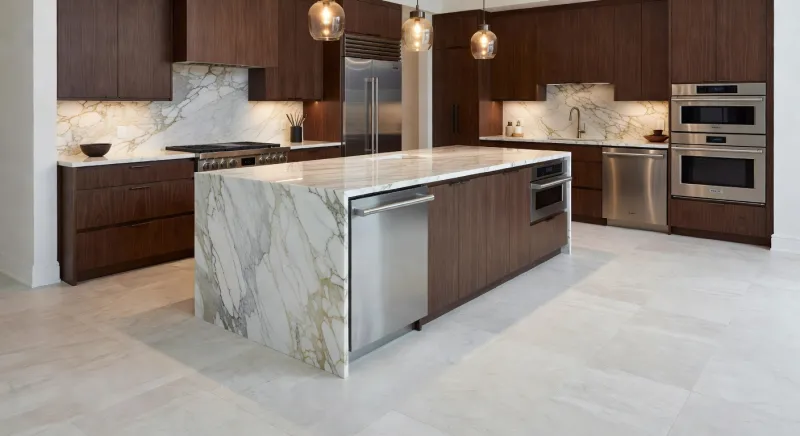
Cooking enthusiasts appreciate larger flooring units for practical reasons too. Fewer grout lines mean less cleaning and maintenance over time. Spills are less likely to seep into seams, preserving the floor's condition. This is ideal for kitchens with heavy use.
One caveat exists with oversized materials in small spaces. Installation must be precise to avoid unevenness or awkward cuts. Homeowners should hire experienced professionals for the job. Following flooring tips for small spaces ensures a flawless finish in luxury kitchens.
Layout Tricks to Enhance Space Perception
The layout of flooring can dramatically alter how a small kitchen feels. Installing tiles or planks diagonally is a classic designer trick. This pattern draws the eye across the room, creating a sense of length. It's a powerful tool for homeowners with compact luxury kitchens.
Kitchen designers often use this diagonal approach with rectangular tiles. The angled lines break up the boxy feel of small rooms. Pairing this with light colors amplifies the effect even further. It's a strategy that maximizes every inch of floor space.
For cooking enthusiasts, layout also impacts workflow in tight areas. A diagonal pattern can subtly guide movement through the kitchen. It avoids the grid-like feel of standard layouts, adding dynamism. This makes meal prep feel less confined.
Another layout tip involves running planks lengthwise in narrow spaces. This elongates the room's appearance, countering its limitations. Homeowners should consult designers for custom patterns that suit their layout. These flooring tips for small spaces ensure both beauty and function.
Material Choices for Durability and Style
Selecting the right material is crucial in small luxury kitchens. Porcelain tiles are a top choice for their durability and versatility. They resist moisture and wear, ideal for busy cooking environments. Homeowners value their longevity in high-traffic areas.
Hardwood offers timeless elegance but requires careful consideration. Engineered wood withstands humidity better than solid hardwood in kitchens. It adds warmth and sophistication to small spaces. Kitchen designers often pair it with underfloor heating for added comfort.
Cooking enthusiasts prioritize materials that handle spills and heat. Porcelain and sealed stone are low-maintenance options for active kitchens. They also come in finishes that mimic natural textures. This blends practicality with luxury appeal seamlessly.
For further inspiration on material selection, explore options at kitchen materials. Homeowners should weigh cost against durability for long-term satisfaction. Testing samples in the actual space is always recommended. These flooring tips for small spaces ensure a perfect match.
Finishes and Textures for Depth and Interest
Finishes play a subtle but impactful role in small luxury kitchens. Glossy or polished surfaces reflect light, adding depth to confined areas. This creates an illusion of more space, a priority for homeowners. It also enhances the high-end feel of the design.
Kitchen designers often recommend satin or semi-gloss finishes for balance. These options offer some reflectivity without excessive shine. They hide minor scratches better than high-gloss surfaces. This suits kitchens with frequent use and activity.
Cooking enthusiasts benefit from textured flooring in small spaces. Slight surface variations prevent slipping during busy meal prep. Textures also add visual interest, breaking up monotony. This keeps the kitchen stylish and safe for daily tasks.
However, overly busy textures can shrink a room's appearance. Homeowners should opt for subtle patterns or natural grains. Pairing these with sleek cabinetry maintains a luxury aesthetic. For more design ideas, check out kitchen design trends.
For kitchen design inspiration, explore Architectural Digest and Houzz.
Frequently Asked Questions
What are the best flooring colors for small luxury kitchens?
Light colors like white, beige, and soft gray are ideal for small luxury kitchens. They reflect light, making the space feel larger and more open. Homeowners can pair these with bold accents for contrast. Kitchen designers often suggest testing shades under natural light. Cooking enthusiasts appreciate how light floors highlight spills for quick cleanup. This ensures both style and practicality in compact spaces.
How do I make a small kitchen floor look bigger?
Using larger tiles or planks reduces visual clutter and seams. Installing flooring diagonally can elongate the room's appearance effectively. Light colors and glossy finishes also enhance spaciousness significantly. Homeowners should avoid dark, busy patterns that shrink the space. Kitchen designers recommend seamless materials like porcelain for this purpose. Following flooring tips for small spaces guarantees a more expansive look.
Is hardwood flooring suitable for small kitchens?
Hardwood can work in small kitchens if chosen wisely. Engineered wood resists humidity better than solid hardwood options. It adds warmth and elegance to luxury designs effortlessly. Homeowners must seal it properly to prevent water damage. Cooking enthusiasts should note potential maintenance with spills. Kitchen designers suggest protective mats near sinks for safety.
What flooring materials are easiest to maintain in small spaces?
Porcelain tiles are incredibly easy to maintain in compact kitchens. They resist stains, moisture, and heavy foot traffic well. Homeowners appreciate their low upkeep in busy households. Cooking enthusiasts find them ideal for frequent spills. Kitchen designers often choose rectified tiles for minimal grout. This ensures a clean look with little effort.
Can flooring layout affect the feel of a small kitchen?
Absolutely, the layout of flooring impacts spatial perception significantly. Diagonal patterns can make a room feel longer and wider. Running planks lengthwise stretches narrow kitchens visually. Homeowners benefit from consulting designers on custom layouts. Cooking enthusiasts enjoy how layouts guide movement in tight areas. Professionals in this field often experiment with angles for best results.
Final Thoughts
Flooring is a transformative element in small luxury kitchens, blending style with spatial solutions. From light colors to strategic layouts, these flooring tips for small spaces cater to homeowners, kitchen designers, and cooking enthusiasts alike. Each choice, whether material or finish, shapes the kitchen's ambiance and functionality.
Implementing these ideas requires careful planning and professional input. Homeowners should explore options at trusted resources like Architectural Digest or Houzz for inspiration. Taking action now can turn a cramped kitchen into a luxurious haven.
